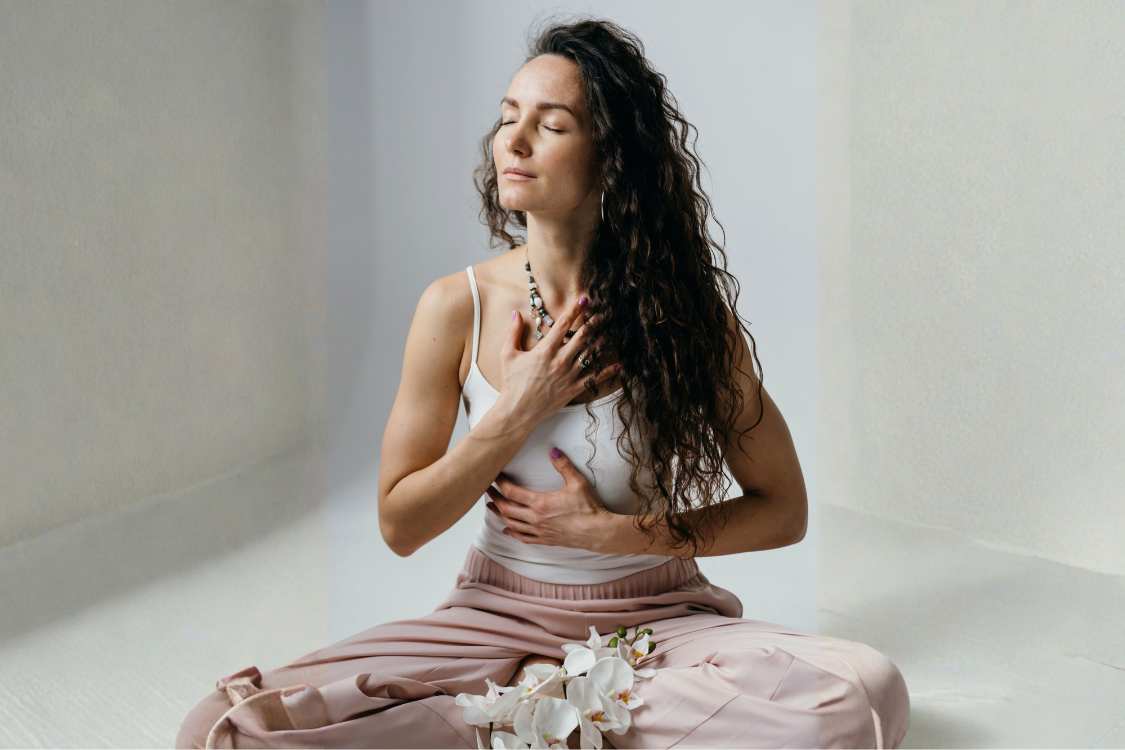





You feel the air change before you can name it: summer's heat loosening its grip, your own mind moving faster than your body can follow. This is vata season announcing itself, asking for a new rhythm.
Every fall the body carries two seasons at once: summer's residual pitta still simmering, and vata season's incoming lightness, cold, dry, mobile, unpredictable. Without pitta balance, this collision shows up as irritation with no clear cause and sleep that will not settle.
So what is actually happening underneath these symptoms?
Ayurveda has a name for what makes this transition so disorienting. It comes down to prana, the intelligence moving through every cell, and how it flows through two currents: prana vayu, the inward breath that draws energy in, and apana vayu, the outward breath that lets it go. Together they govern how we receive and release. When that rhythm breaks, prana scatters outward, and grounding it becomes a necessity, not a preference.
To see how, it helps to start with the season itself.
What Is Vata Season, and Why This Transition Matters
In the Ayurvedic calendar, vata season is the period roughly from late summer through fall, when vata dosha's qualities, cold, dry, mobile, irregular, dominate the environment and the body. This seasonal transition Ayurveda treats as a vulnerable window because it follows directly on pitta season rather than a milder one.
That timing matters more than it might seem. Summer's heat does not disappear the day the weather changes; it lingers in the tissues and nervous system, and the new season arrives to find a body still processing the one before it.
This is why an Ayurvedic seasonal routine matters here: not rigid discipline, but predictable cues that give the nervous system something steady to organize around. Which raises the natural next question: what happens to the pitta that never gets released?
Excess pitta left unreleased before the season turns tends to combine with vata's mobile qualities rather than fade on its own: pitta imbalance layered under incoming restlessness, irritability, inflammation, a mind that will not stop generating thoughts.
At this time of year, pitta balance is less about cooling down and more about completing what summer started. Digestive fire that ran hot for months needs somewhere to go before vata's dryness and movement take over, or the nervous system arrives at the new season already on edge, one of the more overlooked vata imbalance symptoms: a body simultaneously depleted and agitated.
Restoring pitta balance before the season fully turns supports a smoother fall transition, and clears the way for the real work: prana itself.
Understanding Prana and Why It Becomes Unstable in Vata Season
Prana in Ayurveda is not simply breath. It is the intelligence moving between prana vayu, which governs how we take in air, food, and sensation, and apana vayu, which governs how we release what no longer serves.
In this season, that rhythm is the first thing to break.
Here is why: prana vayu moves inward and upward, behind inhalation and the intake of stimulation, while apana vayu moves downward and outward, supporting the breath's release and every other form of letting go. When these currents alternate naturally, receive, process, release, the system stays coherent even under stress.
The vata season disrupts this alternation: its mobility and dryness pull prana vayu into overdrive while apana vayu never gets the stillness it needs to finish, a specific imbalance in vata dosha, and why grounding prana has to mean more than simply slowing down.
Once you know what to look for, the signs are easy to recognize.
The signs that prana has become unstable rarely announce themselves as a diagnosis: a mind that will not stop moving even when the body is exhausted, sleep that breaks mid-night, sudden sensitivity to noise, skipping meals because eating feels like one more decision, a three in the morning wakefulness with no clear trigger.
This is where Ayurvedic grounding differs from generic Ayurveda wellness advice: it treats these not as separate problems, but as one pattern, vata imbalance symptoms of prana scattered upward and apana under-supported, needing a seasonal reset rather than a symptom-by-symptom fix.

From Doing to Being: The Real Invitation of Vata Season
From doing to being is not a poetic phrase. It describes a real shift in how prana moves, from a life organized around output and forward motion toward one with room for apana vayu's downward, receptive current.
This vata season, with its stillness after summer's momentum, is naturally suited to that shift.
Most people drawn to this topic are not undisciplined. They are the opposite: high-functioning, capable, prana having spent years moving almost entirely outward, creating, producing, solving. A system that only moves outward eventually cannot find its way back in.
The invitation of vata season is not to stop doing altogether, but to let apana vayu work again, in the pause most schedules have quietly erased.
So what does that pause look like, in practice?
Grounding prana works best through practices that restore the rhythm between prana vayu and apana vayu, not general relaxation. Dr. Vasant Lad's teaching points to daily oil massage, nasal oil, and alternate nostril breathing as direct ways to reactivate apana and let prana settle.
Start with the body:
- Abhyanga, daily self-massage with warm sesame oil, is core to an Ayurvedic seasonal routine, especially at the feet, ears, neck, and lower back, vata's most vulnerable zones.
- A hot bath in the evening, or even an extra hour of sleep, gives the nervous system the same grounding a warm oil ritual offers, simple support during vata season when the body asks for more stillness.
- Nadi shodhana, an alternate nostril breathing at five to six breaths per minute, gives apana vayu room to complete its downward course, real support for a nervous system caught between prana's inward pull and apana's release.
This same rhythm shows up in sitting quietly in the gap after the exhale, the clearest place to feel prana and apana meet rather than compete. A stable wake time and bedtime round out these grounding practices.
When Grounding Prana Is More Than a Vata Practice
Grounding prana is usually framed as a vata concern, but it matters just as much for pitta and kapha constitutions in this transition.
For a strong pitta constitution, these practices apply, but warmth can be moderated: room-temperature sesame oil and cooling herbs like fennel, used briefly rather than daily and avoided by anyone with high blood pressure.
For a kapha constitution, apana vayu is rarely the issue; what matters more is keeping prana vayu engaged through movement, avoiding over-rest. These practices are gentle and low risk, but anyone with a diagnosed medical condition, who is pregnant, or taking prescription medication should consult a qualified healthcare provider first.
All three constitutions are ultimately working toward the same thing: a system that can hold what it restores.
Why Restoring This Matters Beyond the Physical
Restoring the rhythm between prana and apana during the vata season rebuilds the body's capacity to hold ojas, the reserve of vitality that depends on prana actually settling rather than scattering outward.
There is a reason grounding prana feels less like a wellness upgrade and more like coming home: a nervous system that has moved only outward for a season, or a decade, feels disconnected from its own ground, as though life is happening at it rather than through it.
This matters beyond the individual, since a person whose prana has settled brings a calmer steadiness into every room they enter.
This vata season is an invitation to move, at least for a while, from doing into being, which is exactly why this kind of restoration rarely happens through a single practice done once.
Prana Life is a four month seasonal membership that opens three times a year, aligned with transitions like this one: a twenty one day cleanse guided daily by a senior practitioner team trained under Dr. Vasant Lad, followed by three months of seasonal nourishment, movement, and practice.
For those who feel ready to meet this vata season with more than a routine, Prana Life is where that deeper work happens.
Frequently Asked Questions
What is Vata Season in Ayurveda?
In the Ayurvedic calendar, vata season is generally the period from late summer through fall, when the qualities of vata dosha, cold, dry, light, and mobile, become dominant in the environment and the body. It follows pitta season, so residual heat can complicate the shift. Ayurveda treats this seasonal transition as a time requiring conscious pitta balance, not passive waiting for the weather to settle.
Why is September an important time for seasonal reset?
September marks the hinge point between pitta season and vata season, when leftover heat from summer can combine with vata's incoming dryness and mobility to create irritation, restlessness, and inflammation. A seasonal reset at this moment lets the body release what pitta season built up before vata season adds its own instability, making the fall transition considerably smoother than waiting until symptoms are already established.
How can excess pitta affect the transition into fall?
When pitta is not released before the season turns, its heat and intensity do not disappear, they combine with vata's cold, dry, mobile qualities. This creates a specific imbalance: irritability layered under restlessness, a mind that will not settle, and a body running both hot and scattered at once. Restoring pitta balance before vata season fully arrives makes this fall transition considerably easier to navigate.
What does it mean to ground prana?
Grounding prana means restoring the natural alternation between prana vayu, the current that receives, and apana vayu, the current that releases, rather than letting one dominate the other. In Ayurveda, prana is described as cellular intelligence, not just breath, so grounding prana is less about calming down and more about letting that intelligence descend and stabilize, particularly during a season that pulls it upward and outward.
How do you move from doing to being in daily life?
Moving from doing to being does not require withdrawing from responsibilities. It means building in real pauses, a slower exhale, a few minutes of stillness before the next task, so apana vayu has room to complete its work. Small, consistent moments of doing to being, repeated daily, matter more than one dramatic retreat, especially during vata season, when the nervous system needs steady cues rather than intensity.
What are simple ways to stay balanced during vata season?
A stable wake and sleep time, warm cooked meals, daily abhyanga with warm sesame oil, and a few minutes of alternate nostril breathing are among the more reliable Ayurvedic seasonal routine practices for vata season. Even five minutes of nasya oil each morning, or sitting quietly in the pause between breaths, can meaningfully support pitta balance and nervous system support through the transition.