





Ayurvedic Detox for Gut Health: How a Pitta Home Cleanse Supports Digestion
A pitta Ayurvedic cleanse is a practice rooted in classical Ayurveda, designed to clear the accumulated heat of summer from the digestive system. It works by restoring agni, the digestive fire, and releasing ama, the metabolic residue that builds when digestion is weak. The protocol centers on kitchari, ghee, and triphala: three elements drawn from a lineage of care practiced for thousands of years.
In Ayurveda, the gut is where all elemental imbalance begins. When the digestive fire weakens, what enters the body, whether food, experience, or impression, is no longer fully transformed. What remains becomes ama, a residue that settles and over time spreads. This guide covers both the complete cleanse protocol and the deeper wisdom that reveals why the gut holds so much more than what we eat.
In this guide, you will find:
- Why the gut is where all elemental imbalance begins in Ayurveda
- How to read the body's signals as messages, not malfunctions
- The three principles of Ayurvedic cleansing: restore agni, release ama, nourish what was depleted
- What to eat during a pitta cleanse and why kitchari, ghee, and triphala form a complete system
- How emotional and physical digestion are one system in Ayurveda
- Why seasonal timing matters and how the body's cycles shape when to cleanse
- What ojas is and why restoring it is what the cleanse is ultimately for
Western science is beginning to map what traditional medicine recognized long ago: that the gut is not simply one organ among many. It carries its own nervous system, houses the body's immune intelligence, and is woven through with lymphatic pathways that reach every tissue. In Ayurveda, this is the original premise from which all healing begins. The gut is where the body meets the world, and how that meeting goes determines everything that follows.
At the center of this understanding is agni, the digestive fire that governs not just what you break down, but what you are able to transform and absorb. And in the summer months, when pitta, the dosha of fire and intensity, reaches its peak, that fire has a way of burning in the wrong direction: outward, upward, into inflammation and irritability and a gut that cannot seem to find its rhythm. This article is a map back to balance.
Why Your Gut Is the Center of All Health
The gut is the primary site of digestion, immunity, and nervous system regulation in both modern physiology and Ayurvedic medicine. In Ayurveda, all elemental imbalances are understood to begin here, making digestive health the foundation of whole-body wellbeing.
If you have ever noticed that a difficult week in your gut coincides with a difficult week in your mood, your energy, or your skin, you are noticing something real. The gut does not operate in isolation. It is connected to the rest of the body through systems that Western medicine is only beginning to fully appreciate.
The enteric nervous system, sometimes called the second brain, lines the entire digestive tract with over 100 million nerve cells. The gut also hosts approximately 70 percent of the body's immune tissue and is woven through with an extensive lymphatic network. These are not separate systems that happen to pass through the gut. They are there because the gut is where the body meets the world, where everything external is received, assessed, and either transformed or rejected.
In Ayurveda, this understanding is not new. The digestive tract is recognized as the seat of health, the place where elemental imbalances begin and where, if left unaddressed, they eventually spread. A body that processes well stays well. A body that accumulates, over time, begins to show signs of that accumulation everywhere.

What Is Agni: The Fire That Transforms Everything You Eat
Agni is the Ayurvedic principle of digestive and metabolic fire. It governs the body's ability to transform food into nourishment, break down waste, and maintain elemental balance. Where Western medicine identifies specific mechanisms, Ayurveda names the intelligence that coordinates all of them.
There are days when everything you eat settles easily, energy holds through the afternoon, and the mind stays clear. And there are days when the same foods leave you heavy, foggy, or sluggish before the meal is even finished. That difference is agni.
Western physiology names specific mechanisms:
- Hydrochloric acid in the stomach
- Pancreatic enzymes that break down fats and proteins
-
Microbial communities in the intestine that continue the process long after the meal ends
Ayurveda recognizes all of these as expressions of one underlying intelligence. It is called intelligence agni.
But agni goes further than any single mechanism.
The classical texts describe it as the fire of awareness itself: the intelligence that does not simply break down what you eat, but receives what you live. By which food becomes tissue, yes. And by which experience becomes understanding. In its subtlest expression, agni governs what you are able to process and integrate in every dimension of your life. When it is strong, everything moves. When it is weak, things begin to accumulate.
What Is Ama and How Digestive Waste Becomes Disease
Ama is the Ayurvedic term for undigested metabolic waste that accumulates when digestive fire is insufficient. Over time, ama can migrate from the gut into other tissues and channels, contributing to inflammation, fatigue, and the conditions that precede chronic illness.
Ama is what happens when agni cannot complete its work. Partially digested food, unprocessed experiences, accumulated impressions that the system never fully cleared: these become a residue that settles where it should not.
In the gut, ama looks like bloating, heaviness after meals, a coated tongue in the morning, or a digestive system that seems to work harder than the food warrants. Over time, if it is not cleared, it begins to move. Ayurveda describes ama traveling through the body's channels, settling in areas of existing vulnerability, and contributing to conditions that appear to have nothing to do with digestion.
This is why a gut cleanse in Ayurveda reaches further than the gut. It addresses the primary site of accumulation before that accumulation spreads. And it is why the classical texts recommend cleansing regularly, as a form of ongoing care, not as a crisis response.
What Ama Carries: When Digestion Is More Than Physical
Ama accumulates not only from undigested food but from undigested experience: emotions that were never fully processed, impressions that settled in the tissues rather than moving through. The gut, as the primary site of transformation, holds both the physical and the emotional residue of what was never completed.
There is a reason difficult emotions so often announce themselves in the gut. The tightening before a hard conversation. The nausea of grief. The heaviness that arrives not after a meal but after a month of carrying something without putting it down. Ayurveda does not treat this as metaphor. It treats it as physiology.
When agni is strong, it digests not only food but experience. The difficult conversation moves through. The grief finds its way out. The impression that arrived does not settle permanently into the tissues. When agni is weak, all of it, food and feeling alike, begins to accumulate.
This is why a physical cleanse so often opens something emotional as well. The woman who begins the protocol for bloating finds herself releasing something on day three that had nothing to do with what she ate. The one who came for energy finds herself ready to put down something she has been carrying for longer than she realized. The gut, when it is given room to clear, clears everything it has been holding. This is not a side effect. It is the practice working exactly as it was designed to.
Why Seasonal Cleansing Is an Ayurvedic Practice, Not a Trend
Ayurvedic classical texts recommend cleansing at seasonal transitions because each season naturally accumulates its dominant elements, which then ripen and require clearing as the season closes. Summer, governed by pitta, is one of the most significant cleansing moments in the yearly cycle.
The Ayurvedic calendar is built around a simple observation: each season has a dominant quality, and that quality accumulates in the body over the course of the season. By the end of summer, fire has been building for months. In the body, this shows up as heat: inflammation, irritability, skin reactivity, a digestive system that feels overworked and under-supported.
The classical texts recommended it for a specific reason: by the end of summer, the elements have ripened and the body is ready to clear. Clearing now prevents what would otherwise become a burden carried into the next season.
And there is something worth pausing to notice in this. The body does not simply exist inside nature. It participates in it. When she clears at the turn of the season, she is not managing a biological function. She is moving in rhythm with something much larger than herself. That practice has been recognized and honored for thousands of years precisely because the rhythm it follows is real
Why Pitta Is at the Root of Most Digestive Imbalances
Pitta dosha governs fire, transformation, and digestion. It is the dosha most directly responsible for the strength of agni, and the first to become aggravated when the digestive system is under stress. Most common gut complaints, from acid reflux and inflammation to intense hunger followed by exhaustion, point to pitta imbalance.
You have probably felt excess pitta before, even without knowing its name:
- Intense hunger that arrives suddenly and leaves you depleted rather than nourished
- Irritability that seems connected to missing a meal
- Burning in the chest after foods that never bothered you before
-
Heat that accumulates through summer until the body feels like it is running too hot
In its balanced state, pitta produces sharp digestion, clear thinking, and a consistent, directed energy. When it rises out of balance, that same sharpness turns corrosive. And because pitta governs agni, a pitta imbalance almost always affects digestion first.
Because summer is pitta season, by the time late summer arrives, many people are carrying more fire than their system knows what to do with. A pitta cleanse addresses something specific: the fire that has been building since June and has nowhere to go.
The Three Principles of an Ayurvedic Gut Cleanse
An Ayurvedic gut cleanse operates on three principles: strengthening agni so the body can process accumulated waste, supporting daily elimination to clear what the body is releasing, and nourishing the gut lining so it can rebuild integrity after the cleansing process. In sequence, these principles mirror how any living system repairs itself: first restore capacity, then clear what has accumulated, then rebuild what was depleted.
An Ayurvedic gut cleanse moves through three phases:
- Strengthen agni so the body can process what has accumulated
- Support daily elimination to clear what is being released
-
Nourish the gut lining so it can rebuild integrity
These three principles work in sequence. You cannot effectively remove ama from a system where agni is still too weak to process it. You cannot nourish the gut lining while it is still burdened with accumulated waste. The order matters.
Strengthening agni comes first, and it happens primarily through simplification. When the digestive system is given easier work, agni has more capacity to address what has accumulated. Think of it as redirecting the workforce toward the backlog rather than continuing to take on new projects.
Elimination comes second: daily bowel movements are the primary mechanism by which the body clears ama. Even for those with regular digestion, a cleanse period supports a deeper level of clearing than normal daily function provides.
Nourishment comes third. Once the system has had space to clear, the gut lining requires support to restore its integrity. This is where specific foods and herbs enter, as rebuilders rather than stimulants.
How to Know If Your Agni Needs Support
Ayurveda identifies several signs that indicate agni is functioning below its optimal capacity. These signals are worth recognizing before beginning a cleanse, as they help calibrate the level of support the digestive system actually needs.
Dr. Lad teaches that the simplest test of agni's strength is the presence of genuine hunger: a clean, comfortable appetite that arrives at the right time and resolves completely after eating. Anything less is information worth paying attention to.
The body has not been malfunctioning. It has been communicating in a language most of us were never taught to read. True hunger is the body's confirmation that it is ready to transform what arrives: a clean, settled appetite that resolves completely after eating. Fullness that lingers past an hour tells you the previous meal is still being processed, the system asking for space before it takes on more. The tongue, in Ayurveda, is a window into the gut's current state: clean and pink means clear; coated and thick means ama is present and the system is working overtime.
Before adjusting what you eat, it is worth asking what your digestion is already telling you:
- Do you feel true hunger before meals, or do you eat mostly by the clock?
- After eating, do you feel nourished and clear, or heavy and ready to sleep?
- Is gas, bloating, or a sense of fullness that lingers a regular experience?
-
Is there a coating on your tongue when you wake in the morning?
Any of these, present consistently, indicates that agni is working below capacity and that ama is likely accumulating. These are signs worth listening to. The cleanse is simply the response.

What to Eat During a Simple Cleanse: Kitchari, Ghee, and Triphala
What to Eat During a Pitta Cleanse
During a pitta cleanse, the diet is simplified to warm, easily digestible foods that reduce the burden on agni while actively cooling excess fire. Kitchari, ghee, and triphala are the three central elements of the classical Ayurvedic cleansing protocol.
The logic of the cleansing diet is straightforward: if agni is being used to digest complex foods, it has less capacity to process ama. Simplifying the diet redirects that energy. Choosing kitchari during a cleanse is the first act of listening, giving the body exactly what it needs to do the work it has been waiting to do.
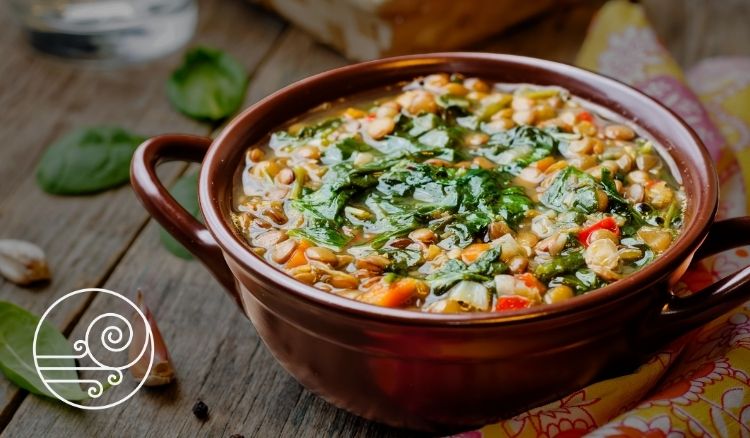
Kitchari, a preparation of white rice and split mung dal cooked until soft and soupy, is the foundation. It is warm, easy to digest, gently spiced, and complete enough to nourish without burdening the system. For those whose agni needs more significant support, warm broths for one or two days before transitioning to kitchari can offer an even gentler entry.
The Importance of Ghee
Ghee (Clarified Butter) is added throughout the cleanse. It supports the integrity of the gut lining, acts as a prebiotic for beneficial bacteria, and carries medicinal properties deeper into the tissues. In the context of a pitta cleanse, ghee also has a cooling effect that helps moderate excess fire.
You can add ample amounts of ghee to your kitchari throughout your cleanse.

Supporting cleansing with Triphala
Triphala, a classical formulation of Terminalia chebula, Terminalia bellerica, and Phyllanthus emblica, supports the elimination process. Taken in the evening, it gently stimulates bowel movement and assists the body in clearing what the cleanse is mobilizing. Modern research continues to explore its mechanisms, which appear to include antioxidant, anti-inflammatory, and prebiotic activity.
These three elements are part of a continuous lineage of care, passed from practitioner to student, from season to season, across thousands of years of Ayurvedic practice. They are home adaptations of a much deeper classical tradition. panchakarma, the original Ayurvedic purification process, takes this clearing into the deeper tissues over multiple weeks under clinical guidance. The home cleanse is a door into that tradition. For those who feel something opening through this practice, panchakarma is what lies beyond it.
Foods to minimize during the cleanse:
- Raw and cold foods, which aggravate vata and slow elimination
- Spicy, fermented, and acidic foods, which increase pitta
- Carbonated drinks and iced water
- Processed foods and excessive sugar
How Long to Cleanse and When to Start
A basic Ayurvedic gut cleanse can be completed in three to five days and is suitable for most healthy adults. Repeating the practice monthly, aligned with the body's natural cycles, supports ongoing clearing and prevents the accumulation that leads to more significant imbalance.
By the second or third day, something shifts. The heaviness after meals begins to lift. Hunger arrives more cleanly, before the meal rather than as background noise throughout the day. Energy holds longer into the afternoon. Most people are surprised by how quickly the body responds when it is simply given room to clear.
Three to five days is the window. Enough to feel a meaningful shift, short enough to be sustainable.
The monthly practice is where the real benefit compounds. A weekend each month, simplified diet, early rest, less stimulation: this is maintenance in the Ayurvedic sense, keeping the terrain clear before accumulation takes hold.
The new moon is a natural anchor for this rhythm. In Ayurveda and in many traditional systems, the new moon is understood as an energetically receptive, inward phase. The body responds well to cleansing during this time, and the cyclical nature of the practice mirrors the cyclical nature of the body itself.
For women, the new moon is one rhythm among several. The menstrual cycle is another. The seasons are a third. These three often align in ways that make certain moments naturally more receptive to clearing. The week before menstruation, when the body is already moving inward and downward, is a window where lighter eating supports what the body is already doing rather than working against it. The turn of a season, when its dominant element has ripened, is another.
Learning to recognize these windows, and to honor them with simplicity, reduced demand, and rest, is what Ayurveda means by living in rhythm. The protocol gives the structure. The body's own cycles offer the timing. Together, they teach something that no single cleanse can: how to inhabit your own biology with intelligence rather than override it.
When a Pitta Cleanse Is More Than Gut Health
While a pitta home cleanse is appropriate for most healthy adults experiencing common digestive imbalance, certain presentations require individualized assessment before cleansing. Constitutional variations and pre-existing conditions can affect how the body responds to a cleansing protocol.
A pitta cleanse addresses the most common pattern of digestive imbalance in the summer months. But bodies are not uniform, and a protocol designed for excess pitta may not be the right starting point for everyone.
Those with a strong vata constitution or significant vata imbalance, characterized by irregular digestion, dryness, anxiety, or low body weight, may find that even a simplified diet is too depleting without additional grounding support. kapha-dominant presentations, marked by sluggishness, heaviness, and slow metabolism, may require warming spices and more active stimulation of agni rather than cooling.
If you are pregnant, nursing, managing a chronic condition, or have experienced significant digestive illness, please consult a qualified Ayurvedic practitioner before beginning any cleansing protocol.
This content is educational and does not replace personalized medical or Ayurvedic guidance.
Why Healing the Gut Changes Everything
In Ayurveda, restoring digestive health opens the door to something larger: clarity of mind, stability of emotion, and the quality of vitality that makes everything else possible. When the gut is well, the whole system reorganizes around that foundation.
You will feel it first as a physical shift: digestion that moves without effort, energy that does not crash after meals, a body that feels lighter than the food you are eating. These are real changes, and they are worth pausing to notice.
But the shift does not stop at the physical. Agni governs transformation in every layer of experience. When it is restored, the mind becomes clearer. Emotions that felt heavy or stuck begin to move. There is a quality of presence that returns when the system is no longer burdened by what it could not process.
In Ayurveda, this quality has a name. Ojas is the subtlest product of perfect digestion: the essence produced when agni completes its full arc of transformation, from food to tissue to vitality. It lives in the heart and expresses itself as clarity, deep immunity, and the kind of groundedness that others feel when they are near you. Ojas cannot be supplemented. It cannot be purchased. It is produced only when the system is clear enough and agni strong enough to carry transformation all the way through. This is what the cleanse is ultimately protecting. The source of what feels most alive.
This is what the classical texts point toward, and what Vrinda Devani describes in her clinical work: the gut is not just where food becomes tissue. It is where the external world becomes the internal one.
Understanding this is the beginning. The Pitta Cleanse is what follows.
The Pitta Cleanse is a guided practice developed under the lineage of Dr. Vasant Lad, BAM&S, MASc, founder and director of The Ayurvedic Institute. It works across every layer the gut touches: the nervous system, the digestive body, the emotional layer, and the spiritual ground, sequenced so it can be completed safely at home.
- Preparation, where the body is eased toward release slowly and with intention
- Cleanse, where the deeper clearing takes place through classical practices: internal and external oleation, purgation, and basti
-
Transition, where what was opened is stabilized and carried forward into the season ahead
What this article invites you to do in three to five days, the program holds over 21, with clinical guidance, sequenced practice, and community.
What the Fire Teaches
- Agni, the digestive fire, governs not only physical digestion but the transformation of experience, emotion, and impression. When it weakens, everything accumulates.
- Ama builds from undigested food and undigested life: the emotion that had nowhere to go, the impression that never moved through.
- A pitta cleanse works by simplifying the diet so agni can address what has accumulated rather than process what keeps arriving.
- Kitchari, ghee, and triphala are part of a lineage of care refined across thousands of years of Ayurvedic practice.
-
The body communicates readiness to clear through specific signals: true hunger before meals, a clean tongue in the morning, energy that holds past the last meal.
Three days is enough to begin. Eat simply during those days, reduce what you ask of yourself, and give the body the stillness it needs to complete what it has already started. The protocol carries the structure, and everything it asks of you is the willingness to step into it.
Frequently Asked Questions
How does Ayurveda improve gut health?
Ayurveda improves gut health by identifying and addressing the root cause of digestive imbalance: weakened agni, the metabolic fire that governs transformation and elimination. Through dietary simplification, targeted herbs like triphala and ginger, and practices that reduce the burden on the digestive system, Ayurveda restores agni's capacity to process food efficiently and clear accumulated metabolic waste.
What is an Ayurvedic detox cleanse?
An Ayurvedic detox cleanse is a short-period protocol designed to strengthen agni, support elimination, and nourish the gut lining. It typically involves simplifying the diet to easily digestible foods like kitchari, incorporating ghee and triphala, reducing stimulation, and allowing the body to clear accumulated ama. Unlike elimination-focused detox programs, it emphasizes restoration as much as removal.
Can a Pitta cleanse help with bloating and indigestion?
Yes. Bloating and indigestion are among the most common signs of pitta imbalance in the digestive system. A pitta cleanse directly addresses excess fire in the gut by cooling the system, reducing the digestive burden, and supporting regular elimination. Most people notice a reduction in bloating and a more consistent digestive rhythm within the first two to three days of the cleanse.
What foods are recommended during a Pitta cleanse?
The foundation of the pitta cleanse diet is kitchari, a warm, soupy preparation of white rice and split mung dal. Ghee is added throughout for its gut-healing and cooling properties. Warm broths may be used in the first one to two days for deeper digestive rest. Foods to minimize include raw and cold foods, spicy and fermented preparations, and anything processed or heavy.
How long does it take to improve digestion with Ayurveda?
A three-to-five day cleanse produces noticeable shifts in energy, digestion, and mental clarity for most people. Sustained improvement comes with consistent practice: incorporating cleansing principles monthly, eating in alignment with your constitution, and addressing the lifestyle factors that weaken agni over time. Ayurveda understands digestive health as a practice, not a single intervention.